Gone Girl
(Read only if you've seen the film, the review starts with spoiler)
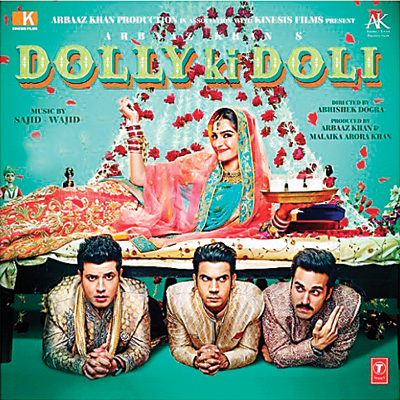
Take this: A girl, who is dumped by the love of her life at the moment when they were planning to elope together to get married, is on a revenge spree- she is now dumping every guy who falls for her (well, she sets a trap for them to fall for her first); robbing- not only them but also their families- of all their jewelries, monies, clothes (even undies, if it's more dreadful revenge) on the night of wedding itself. The wedding night which she promised would give her "grooms" the license to "touch" her. But as the night comes, she deprives them of all the love and lust (One had to simply walk into the bathroom with a porn magazine and spend his whole night there). She pretended love. And she is depriving males of almost half of the country of it. Add more ruthless reality to it, or the kind of realism that seeps in more serious cinema (for this case, read: blood), this could have been a dark psychological thriller- the stuff David Fincher's films are made of. Well, he actually made one such film last year. But all this is treated with lite comic tone which robs the lead character of all the psychopathic behavior that she would possess in a more real world. (Even if the role had such darker side, Sonam Kapoor is not capable enough to bring that depth, heck, she can't play what's in her hand right now!).

But to say that this film is devoid of all the realism would be wrong. There are shades of it and the ulterior motif of the film too is "Screw you, patriarchy": her revenge is not against those grooms but the system that entitles them to be one. (She even says in one scene: asli jail me rehna, shaadi ke jail se toh achha hoga); she is even more hateful towards one "mother-in-law" who was of the view of girls should not be sent to college to pursue education; the guy (Pulkit Samrat), who had dumped her and is the reason behind all this, reasons he couldn't muster up courage that day as his father had pressed him, and he is now a moustachioed policeman (cartoonish though- like that from the franchise of this film's production house, and is also named Robin) who rejects to lead the case that involves females; one lead groom (Varun Sharma) is, again, pressed by her dominating mother while the other lead (brilliant Rajkummar Rao in that Haryanvi accent, and whoa! can even dance better than the production company's in-house "item girl"), in one of the film's finest scenes, tries to rival him over drinks with oneupmanship claiming that he got to have sex with Dolly on their first night.
Picking up one or two characters from the series of all the men whom the lady had conned does limit the scope of the film. You wonder how doesn't she fall in actual love with at least one of the men she plans to thug; how is she so rigid against her vulnerability. But, the director (debutant Abhishek Dogra), thankfully avoid such easy paths and tries out other possibilities in the film's short running duration (of only 100 minutes), like that one young guy (Mohd. Zeeshan Ayub) from the gang starts liking Dolly. Dogra's direction is quite refreshing-- I liked how the entire history of Robin and Dolly is told in one song- no long drabbed stretching of a revelation, just one romantic song in a flashback, that's it; how he introduces little characters to throw in dance numbers, especially that sleazy kind who would call his friend the other day to ask how did the suhagraat go? It is the writing that needed more flesh and more detailed strokes- who are these gang members? What is their story? All we know, in just one line, that one of those members saved Dolly from prostitution and got her into other criminal business. This is where a realistic film got turned into a comic, heist film.
(Read only if you've seen the film, the review starts with spoiler)
Take this: A girl, who is dumped by the love of her life at the moment when they were planning to elope together to get married, is on a revenge spree- she is now dumping every guy who falls for her (well, she sets a trap for them to fall for her first); robbing- not only them but also their families- of all their jewelries, monies, clothes (even undies, if it's more dreadful revenge) on the night of wedding itself. The wedding night which she promised would give her "grooms" the license to "touch" her. But as the night comes, she deprives them of all the love and lust (One had to simply walk into the bathroom with a porn magazine and spend his whole night there). She pretended love. And she is depriving males of almost half of the country of it. Add more ruthless reality to it, or the kind of realism that seeps in more serious cinema (for this case, read: blood), this could have been a dark psychological thriller- the stuff David Fincher's films are made of. Well, he actually made one such film last year. But all this is treated with lite comic tone which robs the lead character of all the psychopathic behavior that she would possess in a more real world. (Even if the role had such darker side, Sonam Kapoor is not capable enough to bring that depth, heck, she can't play what's in her hand right now!).
But to say that this film is devoid of all the realism would be wrong. There are shades of it and the ulterior motif of the film too is "Screw you, patriarchy": her revenge is not against those grooms but the system that entitles them to be one. (She even says in one scene: asli jail me rehna, shaadi ke jail se toh achha hoga); she is even more hateful towards one "mother-in-law" who was of the view of girls should not be sent to college to pursue education; the guy (Pulkit Samrat), who had dumped her and is the reason behind all this, reasons he couldn't muster up courage that day as his father had pressed him, and he is now a moustachioed policeman (cartoonish though- like that from the franchise of this film's production house, and is also named Robin) who rejects to lead the case that involves females; one lead groom (Varun Sharma) is, again, pressed by her dominating mother while the other lead (brilliant Rajkummar Rao in that Haryanvi accent, and whoa! can even dance better than the production company's in-house "item girl"), in one of the film's finest scenes, tries to rival him over drinks with oneupmanship claiming that he got to have sex with Dolly on their first night.
Picking up one or two characters from the series of all the men whom the lady had conned does limit the scope of the film. You wonder how doesn't she fall in actual love with at least one of the men she plans to thug; how is she so rigid against her vulnerability. But, the director (debutant Abhishek Dogra), thankfully avoid such easy paths and tries out other possibilities in the film's short running duration (of only 100 minutes), like that one young guy (Mohd. Zeeshan Ayub) from the gang starts liking Dolly. Dogra's direction is quite refreshing-- I liked how the entire history of Robin and Dolly is told in one song- no long drabbed stretching of a revelation, just one romantic song in a flashback, that's it; how he introduces little characters to throw in dance numbers, especially that sleazy kind who would call his friend the other day to ask how did the suhagraat go? It is the writing that needed more flesh and more detailed strokes- who are these gang members? What is their story? All we know, in just one line, that one of those members saved Dolly from prostitution and got her into other criminal business. This is where a realistic film got turned into a comic, heist film.